Private label sounds simple: put my brand on your glove. In practice the first order stalls for a week or two because the artwork arrives as a screenshot, the barcode is the wrong size, or nobody decided which size goes in which carton. This is the checklist we send before a private label order starts.
1. Decide what is actually private label
There are three levels, and they cost different amounts:
- Own label on the pack — our glove, your printed header card, bag or box. Cheapest, fastest.
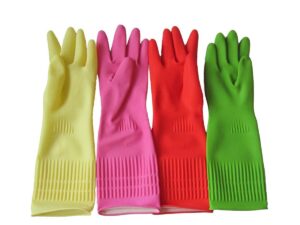
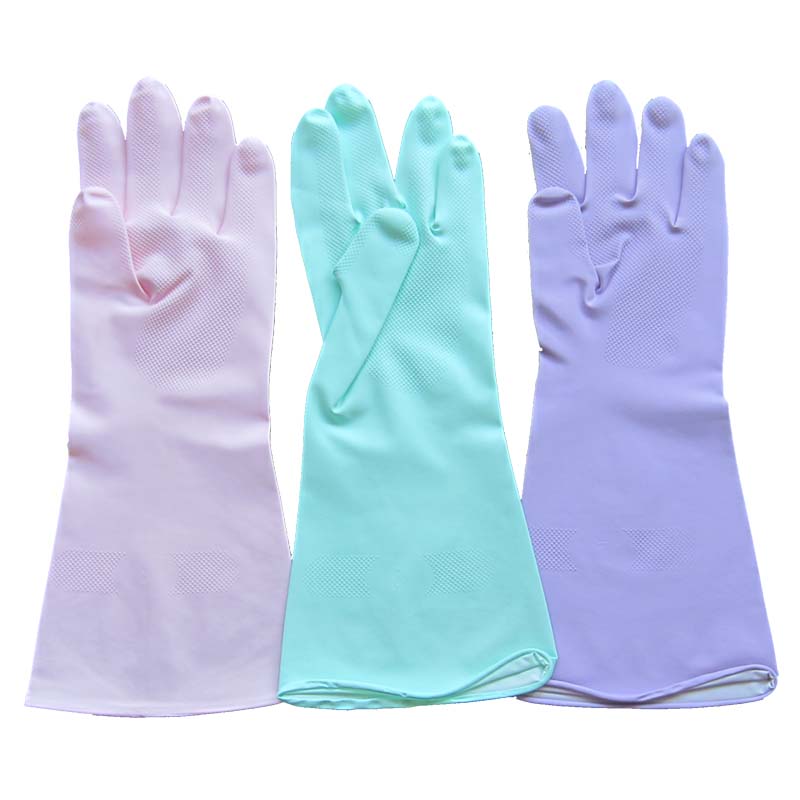
- Own colour and own label — your Pantone on the glove plus your packaging. Needs a colour match run and a higher MOQ.
- Own mould or own specification — different length, weight or grip. Highest MOQ, longest lead time, and a genuine point of difference.
Most first orders should be level one. It gets you on the shelf, and it tells you whether the glove sells before you invest in a mould.
2. Files you need to send
| Item | Format | Common mistake |
|---|---|---|
| Logo | AI, EPS or PDF with fonts outlined | Sending a PNG or a screenshot |
| Pack artwork | Print-ready PDF with dieline and bleed | Artwork supplied without bleed or dieline |
| Colour reference | Pantone number (coated or uncoated) | “Red” or a photo of a red glove |
| Barcode | EAN-13 or UPC-A, with the number as text | Barcode scaled to the wrong size, or no quiet zone |
| Legal text | Exact wording, in the required languages | Invented at the last minute, missing country of origin |
| Carton marks | Shipping marks, side marks, number of languages | Marks that differ from the customer’s own warehouse system |
If you do not have a designer, say so at the start. We can lay out a header card from your logo and a text list, but you must approve the proof before print. That approval is what protects both sides.
3. Barcode details that get packs rejected
A barcode has a fixed size range for reliable scanning. Shrinking it to fit a design is the single most common reason a pack fails at the retailer’s receiving dock. Leave a clear quiet zone on both sides, keep it off folds and off the weld line of a bag, and print it in a dark colour on a light background — never white on red.
4. Colour matching on the glove
If you want your brand colour on the rubber, expect a lab dip. We produce a sample in the closest standard shade, you compare it to your Pantone under daylight, and we adjust. Two or three rounds is normal. Plan for two to three weeks before bulk production starts, and expect a minimum quantity per colour, because the compound is mixed per shade.
5. Packing plan
Decide before the order, not after:
- Pairs per bag or box, and whether sizes are mixed or single-size
- Bags per carton, and whether colours are mixed in one carton
- Carton dimensions and gross weight — these go on your import documents
- Pallet or floor load, and pallet height for your warehouse
A mixed-size carton is convenient for a small brand and a nuisance for a large retailer, whose DC may require single-SKU cartons. Ask your customer before you decide.
6. Samples and approval
The sequence that works:
- Stock sample of the glove, to confirm the glove itself.
- Digital proof of the artwork, approved by email.
- Physical pre-production sample: the actual glove in the actual pack.
- Signed approval, then bulk production.
Do not skip step three. A digital proof cannot show you how a 300 g card feels in the hand, or whether the print colour is right on the board.
7. Timeline
For a first private label order, allow:
- Artwork and proof: 1–2 weeks
- Pre-production sample: 1–2 weeks including courier
- Production: 25–35 days after approval and deposit
- Sea freight: 25–40 days depending on destination
Roughly three months from first email to stock on your floor, if nothing is missing. Most of the delay is artwork, not production.
Most of the delay in a private label project sits in artwork approval, not in production. Before you start, read MOQ, samples and payment for the commercial sequence, and how to read a specification sheet for the technical one.
Related reading
- How to Dry Rubber Gloves Properly Without Ruining Them
- Why Rubber Gloves Get Sticky Inside and How to Stop It
- Powdered vs Powder-Free Gloves: What the Powder Is For
Comparing specifications rather than brands? The household latex range lists weights and cuff lengths model by model.
The gloves described in this article
- Household latex gloves — 30–33 cm, 40–92 g per pair, flocklined or unlined
- Industrial latex gloves — 31–38 cm, 55–200 g per pair
- Extra long cuff gloves — 38 cm, 45 cm and 55 cm
Figures are the weights and lengths we run in production; the exact specification is confirmed per order.