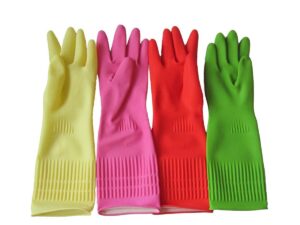
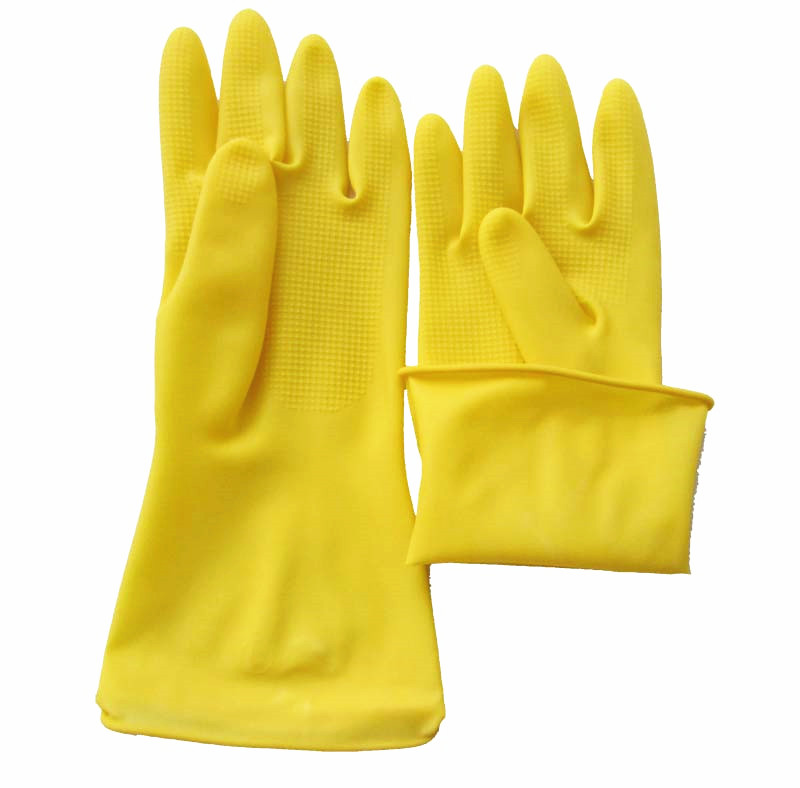
Open a glove and look inside. Some have a soft fuzzy layer, some are bare rubber, a few have a knitted liner. That single detail changes the price, the comfort and the market the glove sells into — and it is the specification buyers ask about last and regret most.
The three linings
Flocklined
A layer of short cotton or rayon fibres is electrostatically attached to the inside of the glove while the rubber is still tacky. The result is a soft, dry-feeling interior that absorbs a little sweat and slides on without powder. Most household gloves sold in supermarkets are flocklined.
Unlined
Bare rubber inside, usually with a talc-free finish. The glove sits closer to the hand, gives better feel through the fingertips, and costs less to make. It is also harder to take off, especially with sweaty hands.
Cotton or knitted lined
A separate knitted liner, either sewn in or dipped as a supported glove. Heavier, warmer, and used for cold work, heat protection and heavy handling rather than household cleaning.
What each one is good for
| Flocklined | Unlined | |
|---|---|---|
| Comfort on bare skin | High, absorbs moisture | Lower, feels clammy after long wear |
| Feel and dexterity | Reduced by the fibre layer | Best, closest to the skin |
| Putting on and off | Easy, slides on dry | Harder, needs powder or a liner |
| Fibre shedding | Possible over time | None |
| Food contact | Usually avoided | Preferred |
| Cost | Higher | Lower |
| Typical buyer | Household retail, cleaning, general purpose | Food preparation, professional kitchens, inspection work |
Why food buyers ask for unlined
A flock lining can shed fibres. On a food-contact surface, a fibre is a complaint, and in an audit it is a finding. Unlined gloves remove that risk and give the wearer more feel, which matters when you are boning fish or decorating a cake. The trade-off is that unlined gloves are harder to remove and can feel damp after an hour of work, so professional kitchens often use them in short bursts rather than all day.
Why retail buyers ask for flocklined
Because the customer tries the glove on in the shop. A flocklined glove goes on easily with a dry hand, feels soft, and does not stick to the skin. In a supermarket, that first ten seconds decides the repeat purchase. Flocklining also lets a manufacturer use a slightly thinner film and still deliver a comfortable glove, which keeps the price competitive.
The cost difference
Flocklining adds material and a process step, so a flocklined glove typically costs a few percent more than the same glove unlined. At container volumes that is a real number, which is why some buyers specify unlined for cost and then discover the returns rate is higher because customers cannot get the glove off.
Practical advice
- If the glove is for retail household use, flocklined is the safer default.
- If the glove touches food, go unlined.
- If the glove is for long shifts in a hot climate, consider a cotton-lined version or a ventilated cuff.
- If you are unsure, order both versions of the same glove in one trial shipment and test them with real users for two weeks. The answer is usually obvious by the end of the first week.
The cost difference between flocklined and unlined is a few percent; the difference in returns is not. Choose the lining by who will wear the glove, not by the unit price. The household latex range lists both versions with their weights and cuff lengths.
Related reading
- How to Dry Rubber Gloves Properly Without Ruining Them
- Why Rubber Gloves Get Sticky Inside and How to Stop It
- Powdered vs Powder-Free Gloves: What the Powder Is For
Comparing specifications rather than brands? The household latex range lists weights and cuff lengths model by model.
The gloves described in this article
- Household latex gloves — 30–33 cm, 40–92 g per pair, flocklined or unlined
- Industrial latex gloves — 31–38 cm, 55–200 g per pair
- Extra long cuff gloves — 38 cm, 45 cm and 55 cm
Figures are the weights and lengths we run in production; the exact specification is confirmed per order.